7 AI Workflow Ideas for Reducing Customer Support Costs and Overhead


Customer support has traditionally operated under a frustrating catch-22: you can have fast responses, you can provide a great customer experience, or you can keep your operational costs low, but you can only pick two. As businesses grow, support tickets inevitably outpace revenue, and the standard solution of simply hiring more agents quickly erodes profit margins.
Today, rising support costs are driven not just by ticket volume, but by the hidden expenses of manual operations: support agent turnover, tedious post-call documentation, seasonal staffing spikes, and the manual double-handling of routine inquiries.
Artificial intelligence breaks this linear growth model. Modern support leaders no longer have to grow their headcount at the exact same pace as their customer base. By transitioning from reactive manual support to proactive AI orchestration, teams can reduce their cost-per-ticket while simultaneously improving first-contact resolution times.
Here are seven actionable strategies to reduce customer support costs using AI solutions.
1. Automate End-to-end Return and Exchange Workflows
Returns are consistently one of the most expensive ticket categories because they require extensive, multi-day back-and-forth communication. An agent has to ask for the order number, verify the reason, generate a label, email it back, and confirm receipt.
A user in a recent Reddit discussion perfectly summarized the pain point: “Returns and exchanges are the worst because they need back and forth. Customer sends request, agent asks for order number and reason... The whole thing takes multiple days and lots of messages, which adds up fast.”
To eliminate this cost, deploy an AI agent connected directly to your order management system. The AI can collect structured details upfront, verify the return policy, and trigger label generation automatically in a single chat flow, resolving the issue without a human agent ever opening the ticket.
✨Case study spotlight ✨
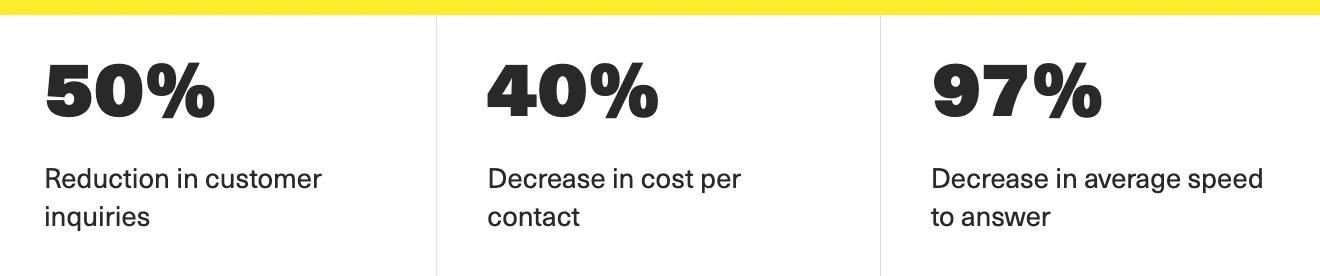
Jerome's Furniture integrated Kustomer directly with their POS system to centralize customer conversations and eliminate the need for agents to jump between tools. By shifting repetitive workflows into cost-saving automated tasks, they reduced duplicate customer inquiries from 42% to 8% and cut their overall cost per contact by 40%.
“Kustomer allowed us to achieve the best possible outcome: maintaining a lean, cost-effective team while significantly improving customer satisfaction. We reduced our cost per contact by 40% and improved our NPS to be two times higher than the industry average.”
Marjorie Carlos
Sr. Dir. of Consumer Experience
2. Measure True Deflection By Tracking Low Re-open Rates
Many teams falsely believe they are saving money because their AI boasts a high deflection rate. However, if the AI provides a generic answer and forcefully closes the chat, the customer will simply email you or call the support line five minutes later.
As one e-commerce operator noted: “The main metric to keep an eye on is deflection rate with low re-open rate... if you're deflecting 70% but half of those reopen to talk to an agent anyway then you're not actually saving money or time, just annoying customers which makes everything worse.”
To actually reduce costs, shift your KPIs away from basic ticket closure and focus on cost per successful resolution. Ensure your AI has strict escalation guardrails so it cleanly hands off complex issues to a human rather than guessing and causing a secondary ticket.
Learn more → The Complete Guide to AI-Powered Ticket Deflection for 2026
3. Deploy Real-time AI Copilots to Eliminate Post-Call Wrap-Up
Even when human agents must handle complex escalations, AI can drastically reduce the cost of that interaction. After a conversation ends, agents typically spend critical minutes typing up case summaries, tagging ticket dispositions, and updating CRM fields. When multiplied across thousands of daily interactions, this manual wrap-up time represents a massive operational expense.
Equipping your agents with an AI copilot eliminates this busywork. The AI listens to the conversation and auto-populates the case summary and necessary backend tags the moment the chat ends. Agents who previously spent 10 minutes on documentation can move to the next customer in seconds.
✨Product feature spotlight ✨
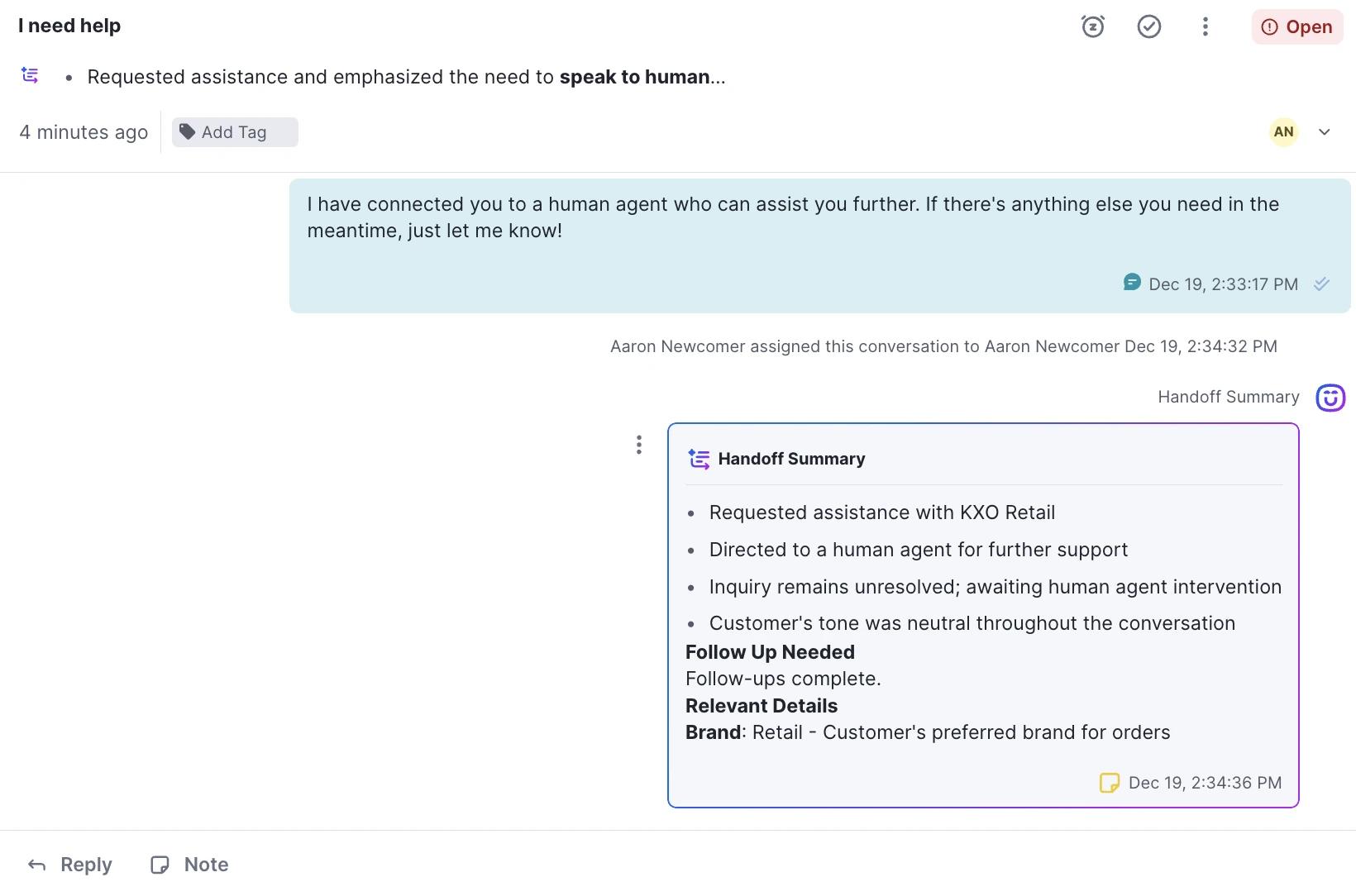
Kustomer Envoy features native AI Summaries that automatically generate short, helpful overviews of items in a customer's timeline, including conversations, the customer's profile, and custom objects. You can also turn on conversation handoff and close summaries to give agents a quick snapshot of a conversation when it's reassigned or closed.
4. Intercept WISMO Queries with Proactive Notifications
“Where is my order?” (WISMO) tickets consume enormous agent bandwidth despite being incredibly straightforward to resolve. While a chatbot can pull tracking links to answer these customer queries, the most cost-effective strategy is preventing the question entirely.
A highly effective tactic shared by support teams on Reddit: “The proactive notification thing is underrated. If you email customers at each step... [it] reduces 'where's my order' tickets by 30-40%.”
Connect your AI to your shipping logistics to trigger automated, proactive updates regarding delays or delivery windows. Solving the customer's anxiety before they navigate to your helpdesk is the cheapest way to resolve a ticket.
5. Shift from Manual QA Sampling to Automated Evaluation
Traditional quality assurance (QA) programs sample a tiny fraction of customer interactions, typically around 2% to 5%. This means QA teams spend hours manually reading transcripts just to spot-check basic compliance, while major operational bottlenecks go unnoticed.
AI-powered QA evaluates 100% of your interactions against predefined criteria instantly. It scores conversations on accuracy, tone, and resolution effectiveness without requiring proportional increases in QA staffing. This comprehensive coverage identifies exactly which agents need coaching and which processes are inflating your handle times, allowing you to fix costly inefficiencies immediately.
6. Keep Your Knowledge Base Current through Automated Maintenance
AI systems are only as good as the knowledge base they ingest. Outdated documentation creates a cascade of costs: the AI confidently delivers the wrong answer, the customer gets angry, and the ticket escalates to a human who now has to spend extra time de-escalating the situation.
Advanced AI tools for CX continuously audit your support conversations to detect when existing articles fail to resolve issues. The system automatically flags missing information or contradictory policies, allowing your operations team to update documentation proactively. This modern approach to knowledge management prevents the quiet knowledge decay that slowly inflates support costs over time.
7. Slash Agent Onboarding Costs with AI-powered Training
Agent turnover and onboarding represent a massive hidden cost. New hires typically require weeks of classroom instruction and shadowing before they can handle live interactions, temporarily lowering your overall team efficiency.
AI-driven training compresses this timeline by providing realistic, simulated customer environments. New agents can practice handling angry customers or complex billing issues with an AI bot that mimics real behavior and provides immediate coaching feedback. Agents reach full productivity faster, make fewer costly errors during their first weeks, and require less direct supervision from senior staff.
✨Product feature spotlight ✨
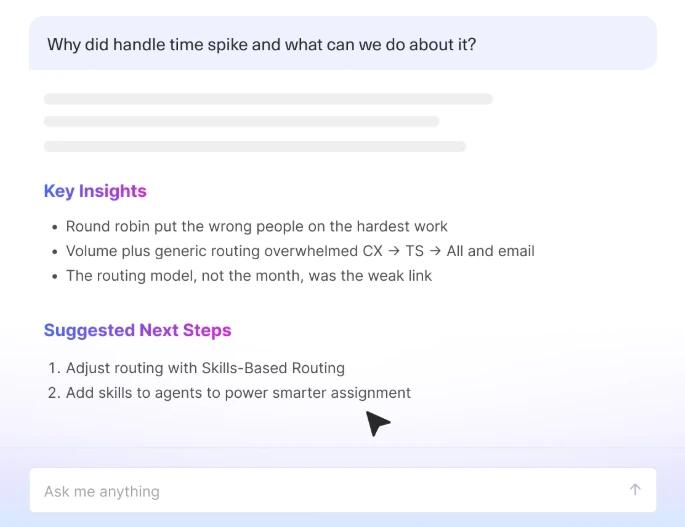
With AI-powered explanations built into every report, Kustomer shows you what changed, why it changed, and how to act. For example, you can use the Kustomer Data Explorer to get personalized recommendations to improve staffing, routing, coaching, and outcomes, or build rep scorecards to identify top performers, and create targeted coaching plans.

Reduce Support Costs and Scale Efficiently with Kustomer AI
Modern customer service teams cannot afford disconnected tools that slow agents down and inflate operational costs. Kustomer is an AI-native customer experience platform that unifies all your customer data and support channels into a single, seamless workspace. By giving both human agents and AI access to the exact same real-time context, Kustomer eliminates repetitive manual work and drastically improves resolution rates.
Here is how Kustomer’s AI directly reduces your support overhead:
- End-to-end autonomous agents: Deploy AI that uses natural language understanding to resolve complex support interactions and execute backend workflows, like processing refunds, without human intervention.
- Real-time AI copilot: Equip your human agents with an embedded assistant that instantly summarizes long conversation threads, pulls relevant customer history, and suggests accurate replies to slash average handle times.
- Visual workflow builder: Create, test, and deploy sophisticated AI routing and automation through a no-code interface, allowing your operations team to adapt to volume spikes without waiting on expensive developer resources.
- Explainable reasoning engine: Maintain complete control over your customer experience by viewing the exact step-by-step logic, procedures, and data sources the AI uses to make every automated decision.
- Built-in escalation guardrails: Set specific thresholds that confidently dictate AI autonomy, ensuring high-risk or sensitive interactions are instantly routed to the right human agent.
See how an AI-native CX platform can transform your support operations and protect your profit margins. Book a demo to explore Kustomer today.
FAQs
What types of AI technology are most useful for customer support teams?
There are a few primary categories of AI that serve different functions within a modern customer experience strategy:
- Generative AI: Goes beyond rigid, pre-written templates by using natural language processing to understand context. It is used to draft highly accurate, personalized replies and instantly summarize long email threads.
- AI chatbots: Modern bots act as your autonomous frontline defense. Their primary function is to resolve routine queries (like tracking an order status or processing a return) entirely on their own, deflecting volume away from your human queue.
- Embedded AI assistance: Also known as agent copilots, this technology sits directly inside the human agent's workspace. It provides real-time coaching, auto-populates CRM tags, and surfaces relevant knowledge base articles so reps can handle complex escalations faster.
How can businesses implement AI for cost reduction without sacrificing service quality?
The key is deploying AI to eliminate frustrating wait times for basic questions, rather than forcing it to handle complex emotional issues. When a bot provides a faster resolution for simple inquiries, customer satisfaction naturally increases. This allows your human team to dedicate their time to high-value interactions that require deep empathy.
How does AI automation impact the daily workflow of human agents?
AI automation tools fundamentally shift agents away from manual data entry. By acting as the first line of defense to triage incoming tickets, the system completely removes repetitive tasks from the human queue. This serves to streamline the entire ticket lifecycle and significantly boosts overall agent productivity.
Which specific support scenarios benefit the most from AI intervention?
AI excels at intercepting routine tasks before they reach the inbox. In the SaaS industry, AI helps technical teams by guiding users through complex troubleshooting steps autonomously. Addressing these immediate customer needs ensures that agents only step in for personalized follow-up, which directly drives long-term retention.
Is AI a truly scalable solution for managing massive ticket spikes?
Yes, modern platforms provide unmatched cost efficiency because they decouple ticket growth from headcount growth. During high-volume periods, machine learning models analyze historical data to forecast volume trends accurately. This allows support teams to absorb seasonal spikes and maintain lower costs without hiring temporary staff.