Introducing Conversation Intelligence & AI QA: The Next Step in Unifying Customer Data
We started Kustomer because we believed customer service needed a better foundation. We were driven by the inherent truth that customer experience is about relationships, not tickets. That truth drove us to build a unified customer timeline: the full history of orders, interactions, and conversations, in one place.
That foundation has changed the way CX teams visualize and act on customer data. But there’s another truth we’ve been grappling with: some of the most valuable customer data lives within the conversations themselves. They’re full of signals about what customers need, how they’re feeling, and where something’s about to go wrong. And the unstructured nature of conversation data means that most of those signals are never captured.
Until now. I’m happy to unveil the next step in the vision that ignited the founding of Kustomer. We unified customer history so teams could see the entire relationship, and now we’ve built a way to understand, learn from, and act on every conversation within that history.
Want to see it live? Get a demo.
The Conversation Data Challenge
Conversations have traditionally been the messiest data a support team has. They’re unstructured and spread across channels, with the heart of an issue often emerging at unpredictable stages of an interaction. They’re full of useful information that never makes it into a report.
Until recently, there was only one real way to turn a conversation into structured data: a person or team reading and tagging it manually. That process is slow, inconsistent, and because of the strain it puts on a team’s resources, it often doesn’t happen. Tags get missed, categories get applied inconsistently, and valuable details remain buried.
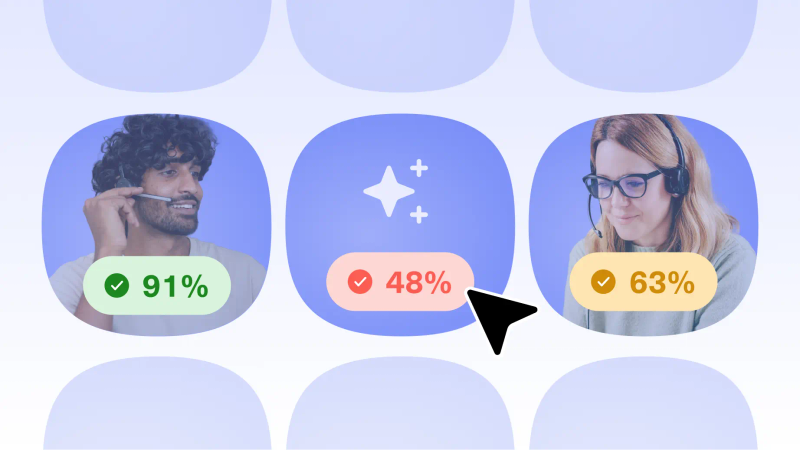
The same problem shows up in quality assurance. Most teams can only review a few conversations per agent, per week. No matter how thoughtful that review may be, it still results in coaching and performance evaluation that’s based on a sliver of the data.
And now AI agents are handling a growing share of conversations. That work needs diligent oversight too, but manual sampling isn’t built for the speed and volume that AI agents operate at.
The fix is not throwing even more resources at manual review; that’s simply not a scalable solution for where CX is now. The fix is a system that makes every conversation structured, reportable, and reviewable automatically.
Introducing Conversation Intelligence and AI QA
That’s why we created Conversation Intelligence and AI QA. They’re two expressions of the same ideas:
- Turn conversations into structured, trustworthy, and actionable information instead of leaving them stuck in transcripts.
- Empower CX teams to act on all of their conversation data, not just the fraction they’re able to manually review.
Conversation Intelligence and AI QA work because they leverage AI Attributes and Kustomer’s unified data foundation. They don’t bolt onto Kustomer as a separate layer. The moment they run, their output behaves like any other Kustomer data: reportable, searchable, and usable in workflows and routing.
AI Attributes: Turning Conversations Into Structured Data
Most CX teams can’t reliably answer a basic question: why are customers actually contacting us right now? The information is there, buried across thousands of conversations, but there’s no practical way to extract it at scale.
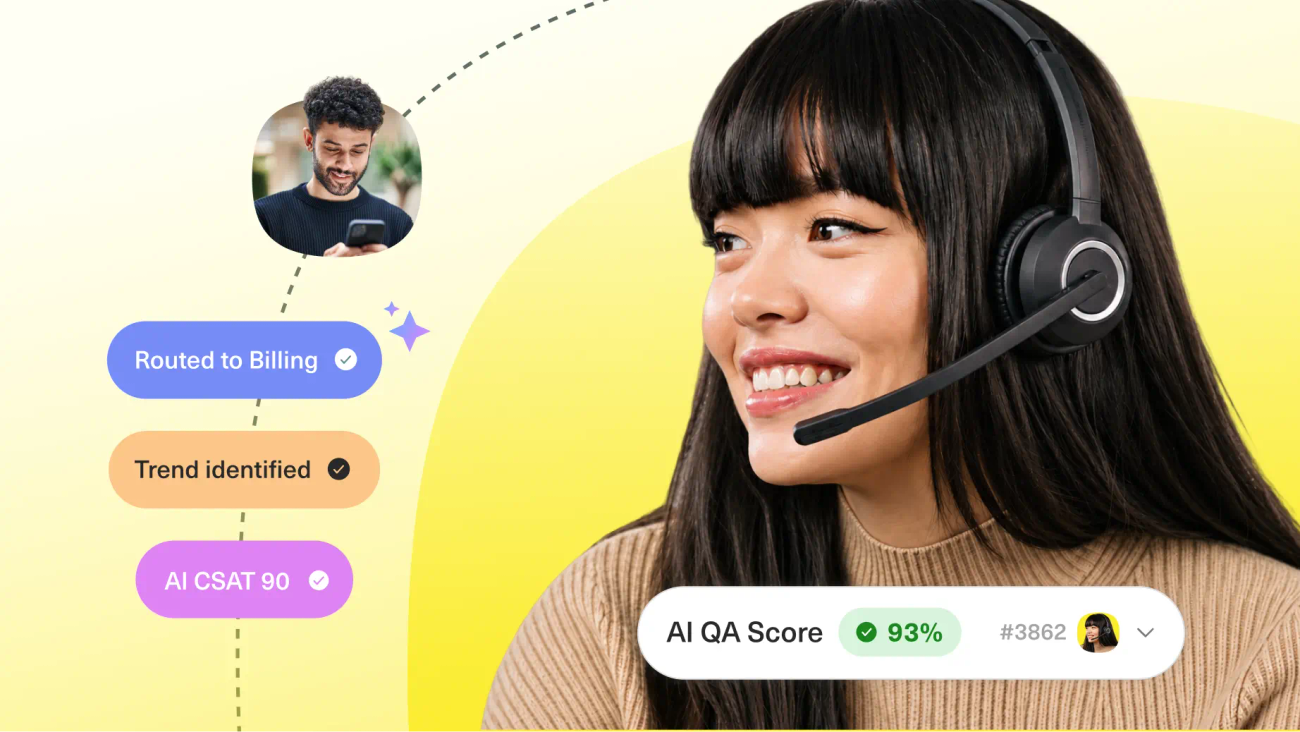
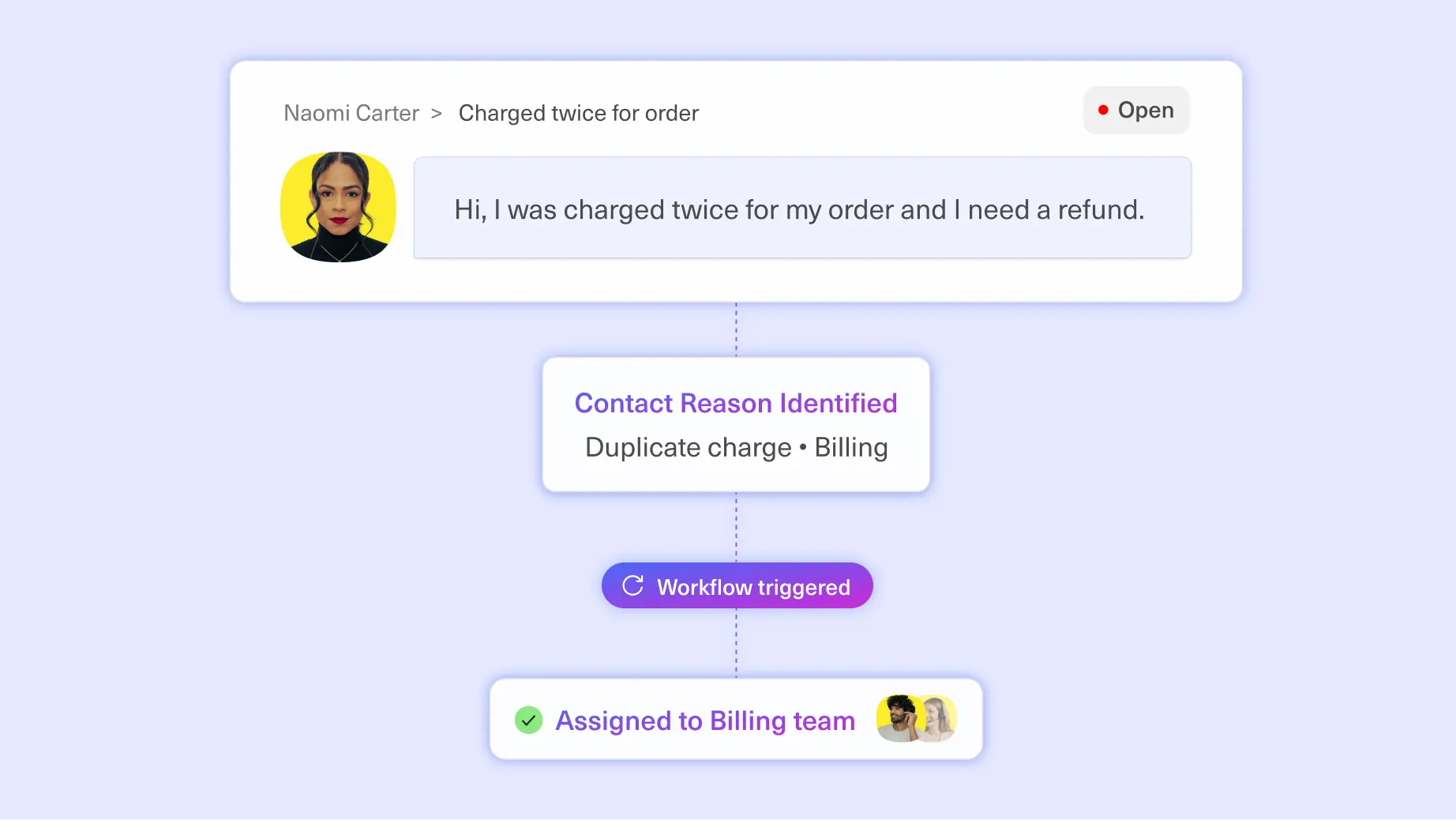
Conversation Intelligence classifies, scores, and extracts information from every conversation automatically. A conversation that starts with an order status check and turns into a late shipment issue gets tagged correctly. A frustrated exchange gets scored for sentiment. Specific, open-ended details get extracted from a chat and turned into searchable fields. All of it happens without someone tagging anything by hand.
Because the data lives natively inside Kustomer, it can be acted on the moment it’s created, not reviewed after the fact:
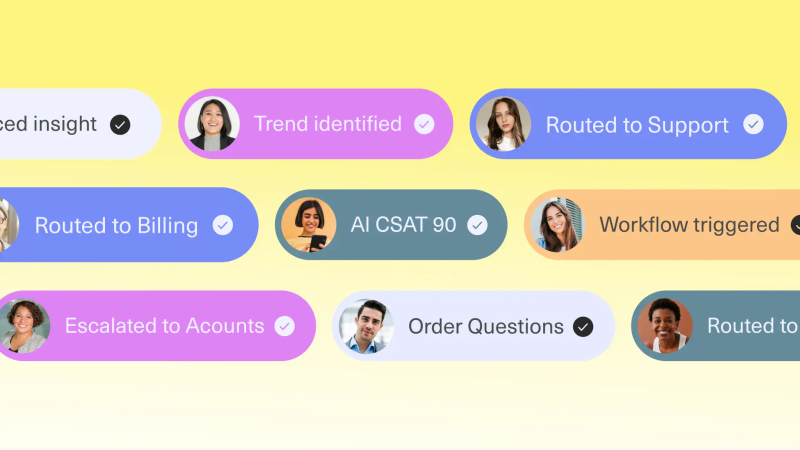
- Route a conversation to the right team the instant a contact reason is identified.
- Trigger a workflow when a specific condition shows up, like a product defect or a return request.
- Surface alerts when a value crosses a threshold worth a human’s attention.
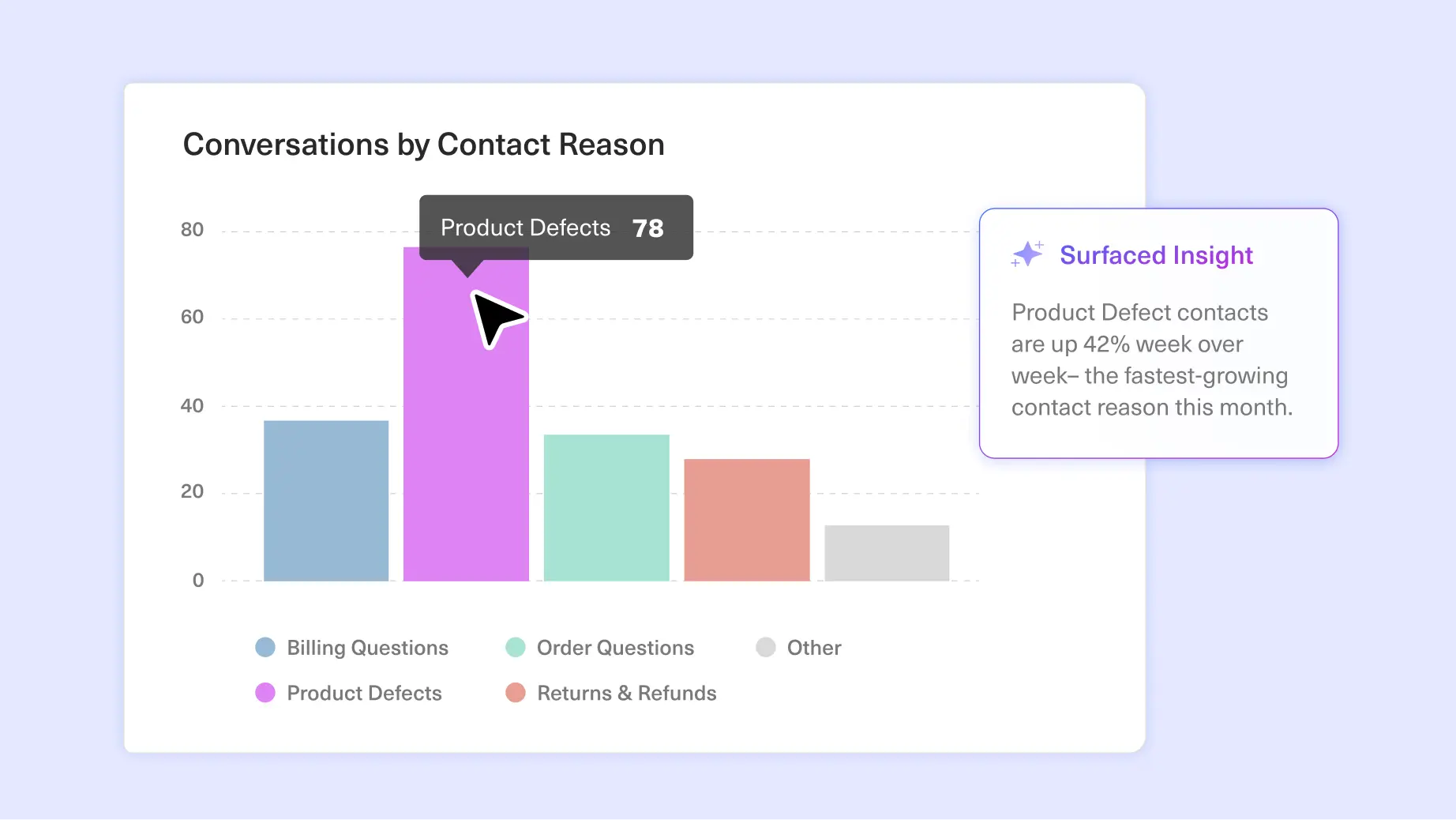
Every value that Conversation Intelligence produces comes with the AI’s reasoning attached. Nothing here is a black box you have to take on faith; you can easily see why every conversation was classified and scored the way it was.
Teams are already using Conversation Intelligence to replace manual tagging with automatic contact-reason classification, score satisfaction on every closed conversation instead of relying on surveys, and pull details like order numbers straight out of conversations with no manual lookup.
The result: no more manual tagging, no more waiting on engineering to answer a basic reporting question, no more guessing at what’s happening across the business.
“Conversation Intelligence has given us a much smarter way to understand and route customer conversations,” says Simon Birch, Head of Customer Experience at Loaf. “Rather than relying on keywords, it understands the intent behind why a customer is getting in touch, helping us get conversations to the right team more accurately and giving us much better insight into what our customers actually need.”
AI QA: Reviewing All the Work, Not Guessing Based on Samples
You wouldn’t hire someone in any role, let alone a customer-facing one, and never check their work. But when a team can only review a few conversations per agent, most of the work goes unseen. The same gap applies to AI agents, which can handle conversations at a volume no manager could manually inspect one by one.
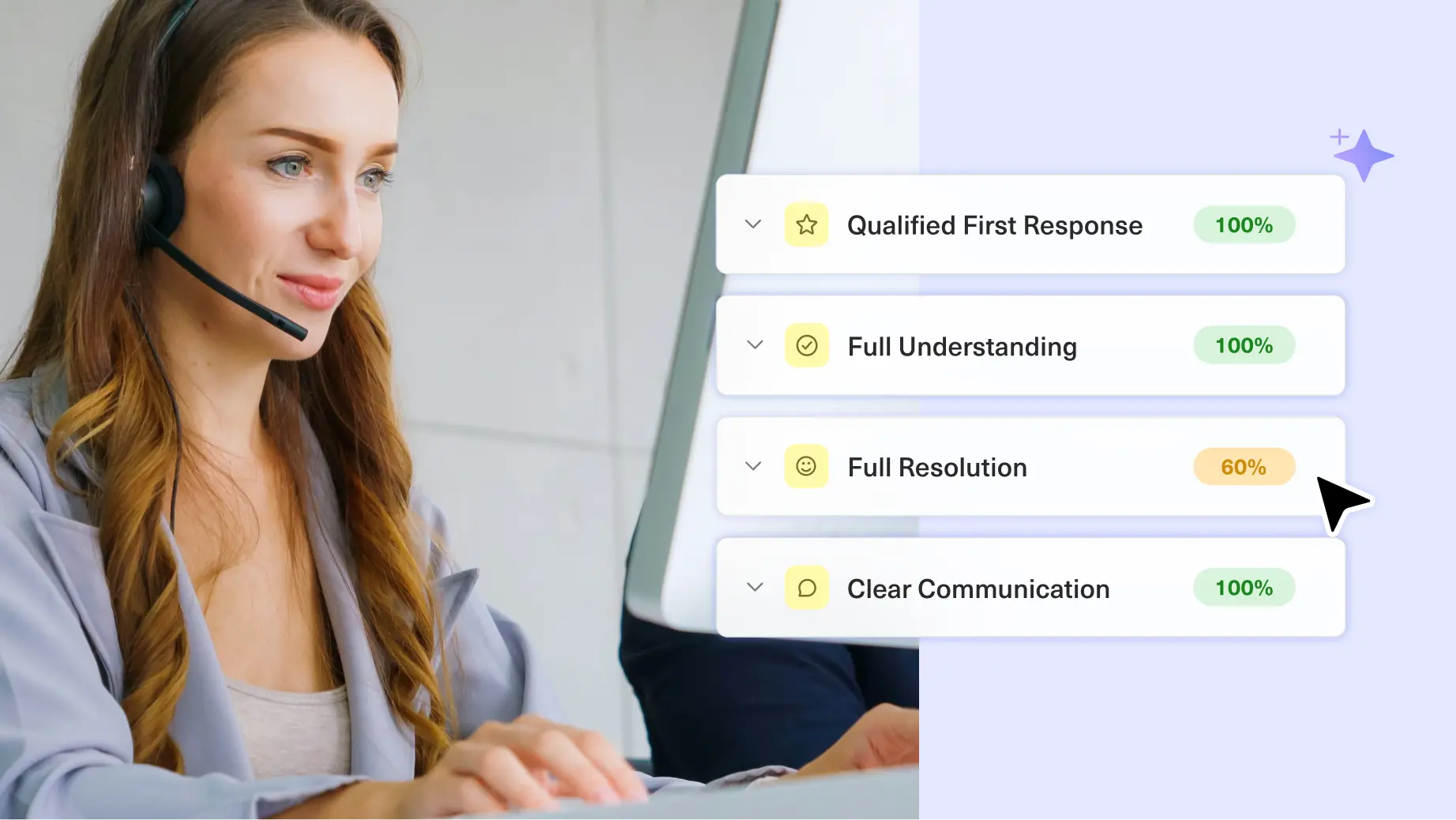
AI QA closes that gap. It scores every conversation across both AI and human agents against criteria you define, with reasoning attached to every score. These assessments are grounded in your own knowledge bases, policies, and procedures, not a generic standard.
AI QA revolutionizes what coaching and optimization look like:
- Onboarding becomes faster as new agents get consistent, evidence-based feedback from day one.
- Full-coverage scoring with attached reasoning gives reps concrete, specific areas for improvement based on comprehensive data, not a manager’s interpretation of a small sample.
- When an AI agent isn’t handling something the way you want, you can pinpoint exactly where it broke down and fix the underlying procedure.
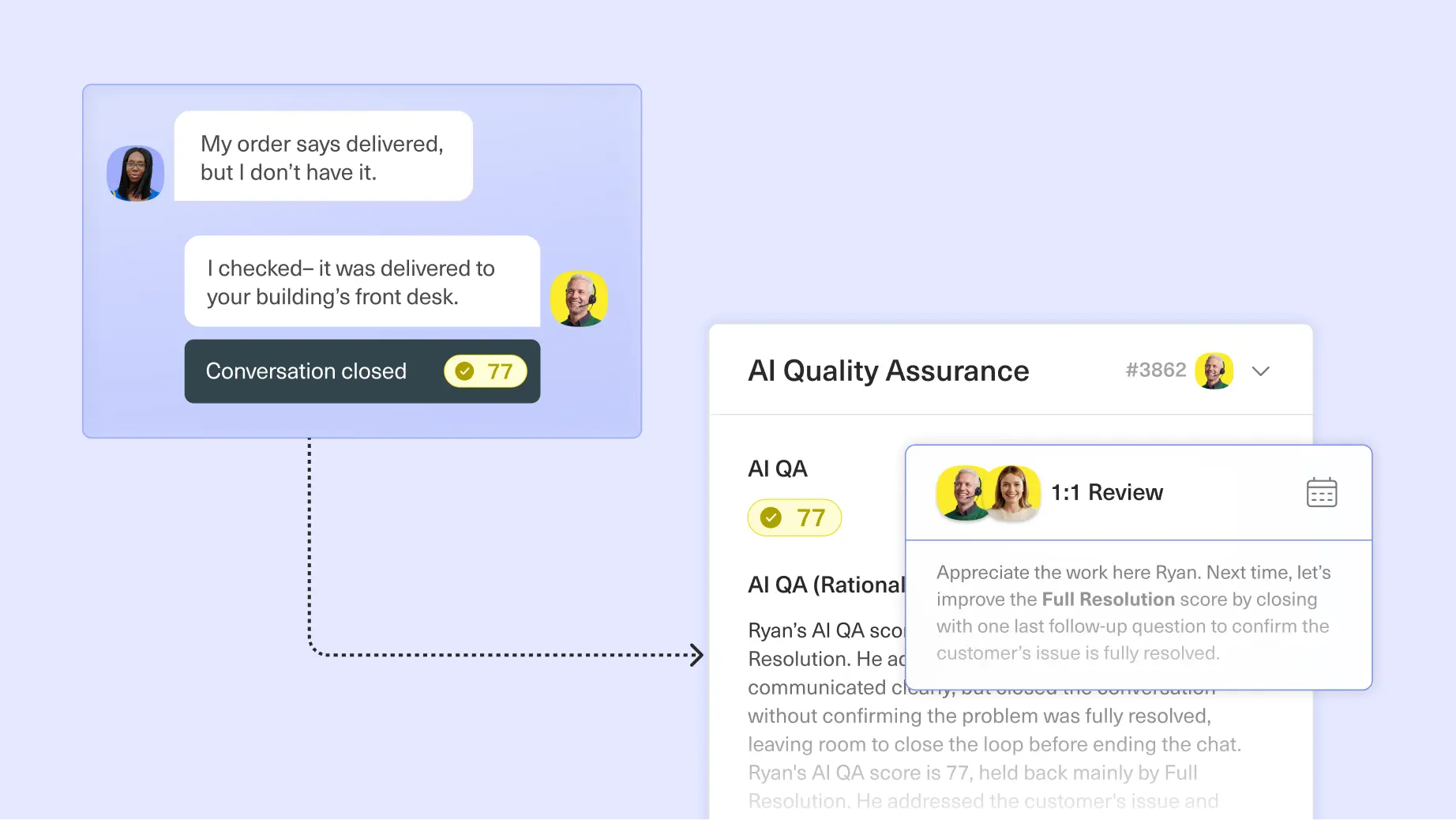
The result: coaching and improvement decisions are grounded in full coverage, not guesswork. A manager can point to patterns across dozens of conversations instead of debating whether a few interactions are indicative of the whole. Teams can strategically optimize an AI agent’s instructions based on where they’re actually falling short.
This isn’t about replacing judgment; human oversight will always play a pivotal role in CX decision-making. It’s about giving people, and AI agents, better feedback than any marginal sample of the data could ever provide.
The Unified CX Foundation Makes the Difference
AI QA and Conversation Intelligence aren’t just isolated features, and the structured conversation data doesn’t just sit still. Conversation Intelligence is just one of several AI Attributes that feed the rest of Kustomer’s unified AI ecosystem. It can be searched and analyzed in Data Explorer, and it can provide richer context for Concierge and Envoy.
The benefits compound: the more conversations become structured data, the smarter every AI capability gets. This self-improving system works because of the underlying data model we built from the start.
What’s Next
I’m grateful to the Kustomer team and the many customers who helped shape this important work through beta. Their diligent effort and feedback has allowed us to deliver the best possible versions of these exciting innovations in AI-native CX.
Conversation Intelligence and AI QA represent the latest step in a long effort to make every customer interaction actionable. There’s plenty more coming to further bolster our unified data foundation and provide even more ways to turn customer data into better customer experiences.
We’ve always known that critical answers live inside of conversations. We’re thrilled to take this step in turning those conversations into intelligence, and that intelligence into action.