Design Smarter Workflows Without Overcomplicating Your Stack: A Conversation with Carpe's Caroline ON Wilson

Watch the Live Recording
Introduction
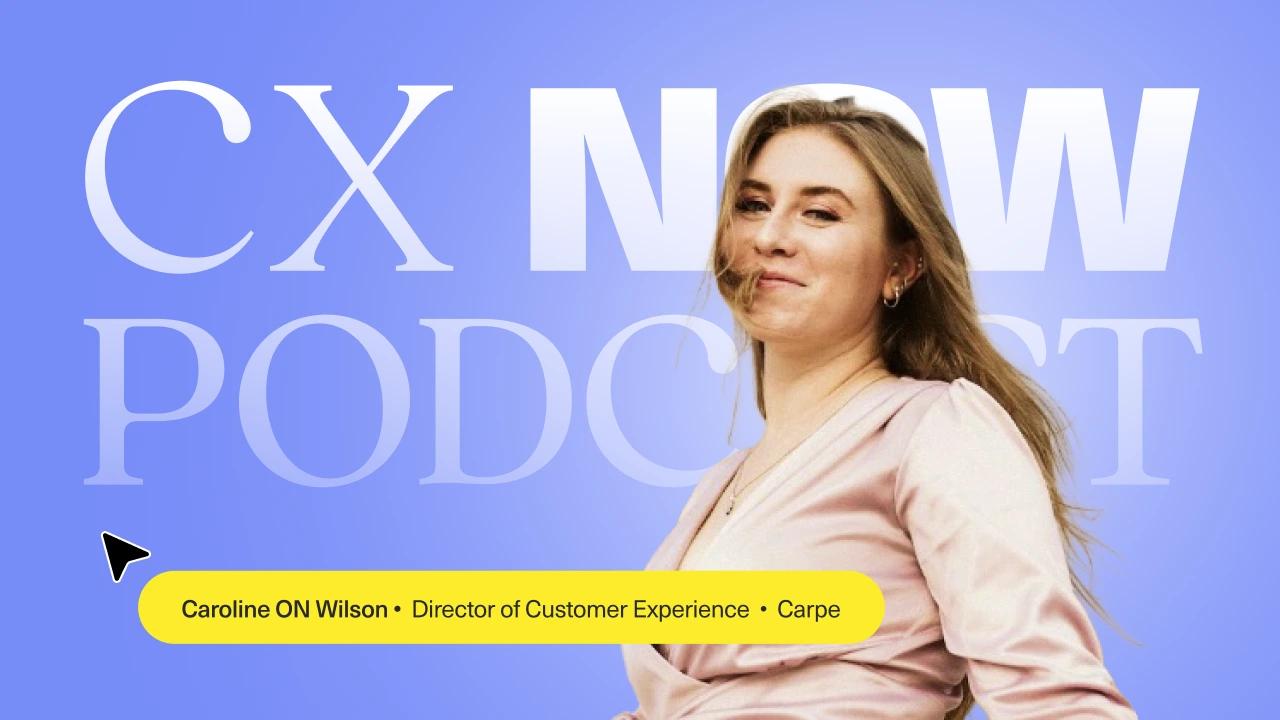
Caroline ON Wilson, Director of Customer Experience at Carpe, explains how to tell a tool problem from a process problem and how her team built an agent decision flow from about 10 shortcut folders in Kustomer. She also covers how to spot a workflow that has become too complicated, why she ships at 70% and refines the rest, and the three corkboard questions she asks of every new system. Lisa Painter, Head of Client & Leadership Experiences, hosts this episode of the CX Now Podcast.
“Iteration is a skill, and in the world of AI it’s going to be more and more important.”
Caroline ON Wilson
Director of Customer Experience, Carpe
Should you buy a new CX tool or use what you already have?
Test what you already have first. Caroline says the most expensive mistake she sees is buying a new tool, often on a year-long contract, before checking what she can build or adjust in the current setup. A tool problem is a gap the platform can't close even after you configure it and build around it. A process problem is a gap created by how the work is set up, such as an unaudited help desk, messy tags, or workflows no one has reviewed. Before signing anything, Caroline asks whether the inefficient process costs more than the new contract, and whether the tool will earn back what it costs.
How do you know a workflow is too complicated?
Watch your reporting and ask your team. Caroline checks whether average handle time goes up after a new workflow launches. She pairs that with quick check-ins: a morning huddle, a Slack poll, or an ESAT after a launch asking whether the process is helping. She also tests it herself. In her view, a CX leader should use the new shortcut with a customer and jump into the queue to see how it feels.
What does shipping at 70% mean for CX leaders?
Launch a version that is about 70% done, then refine the last 30% with your team's feedback. Caroline's reasoning is that you invest less up front, so it hurts less when you have to go back to the drawing board. She says leaders who are proud of their flowcharts need some humility to accept when something isn't working. She calls iteration a skill that matters more as AI speeds things up.
How do you simplify agent decision-making without new software?
Build the decision flow inside the help desk you already use. Carpe is a subscription company with different resolution flows for different customer types, and its agents have many shortcuts. Her team considered a web app or a flowchart but ruled them out, because agents would have to keep one more platform open. Instead, they built an if-this-then-that flow in Kustomer from about 10 shortcut subfolders. Agents click yes or no until they reach the right shortcut, which lowers the mental load of choosing, speeds up the decision, and helps agents feel confident in it. Learn more about shortcuts in Kustomer here.
What three questions should you ask of every CX system?
Caroline keeps a corkboard behind her desk with three questions: Have I served the team today? Have I served the system today? Have I served the customers today? She asks whether a process helps her team, whether it improves or simplifies something in the system, and whether it reduces complexity and makes customers feel taken care of and heard. A complex build that meets all three is likely worth it. One that meets none raises the question of whether you need it at all.
FAQ
Meet the Guest
Caroline ON Wilson is Director of Customer Experience at Carpe, a subscription company where her team builds personalized resolution flows for different customer types. She builds and tests workflows herself, and she checks what the platform can already do before looking at new tools. Her rule: every new system has to serve the team, the system, and the customer.
Full Transcript
This interview has been lightly edited for clarity.