When the SMS layer goes dark, so does your CX
When the SMS layer goes dark, so does your CX
A fire at a data center in the Netherlands last week took down Vonage's SMS infrastructure for over 36 hours — knocking out identity verification, outbound notifications, and two-way messaging for enterprise customers across Europe and the Middle East. A related API issue ran four days before resolution.
The uncomfortable part: Vonage's own post-incident write-up confirmed a failover path existed. It just didn't move fast enough — or for everyone.
SMS is the kind of infrastructure that becomes invisible until it fails. It sits underneath verification flows, service alerts, appointment reminders, and real-time support threads. When it goes, customers don't see a vendor outage. They see a brand that stopped responding.
For CX leaders, this is a prompt to pressure-test your CPaaS dependencies before the next incident. Know where your messaging infrastructure lives, how many independent facilities back it up, and what your vendor's actual failover SLA looks like — not just what their marketing materials say. A blog post explaining the outage after 36 hours of silence isn't a resilience strategy.
Wendy's bets its turnaround on getting the basics right
Five consecutive quarters of declining same-store sales have Wendy's in full recovery mode with a playbook focused on fundamentals: cleanliness and order accuracy. Label printers now in 85% of locations drove a 170 basis point improvement in order accuracy scores; a new "White Glove" cleanliness program added 160 basis points in customer satisfaction.
Some might call it meaningful proof that operational consistency moves the needle. For me, those read “table stakes” — getting the meal I paid for and a clean place to consume it seem like bringing the brand back to baseline.
However, the takeaway is clear: when brand trust erodes, the path back runs through the basics — accuracy, consistency, reliability — before loyalty programs or promotions can do their job.
Costco tweaks its iconic hot dog deal
Costco is keeping its beloved $1.50 hot dog and beverage deal, but offering a new option: a bottle of water instead of a fountain drink. It’s the first update to the deal in over 40 years.
Customers are happy that they have a new, more portable (and healthier) option and it’s likely not that much lift on Costco, as the water comes from its Kirkland Signature in-house brand.
It shows that brands can listen to customer feedback and make new options available to them by getting creative and bundling with other existing offerings.
How Cate Marques Built a CX Career — and a Seat at the Table
What does it actually take for a CX leader to earn a permanent seat in the boardroom?
In this episode of the CX Now Podcast, host Lauren Gold sits down with Cate Marques, Chief Experience Officer at Terra Kaffe, for a candid conversation about building a CX career from the ground up, making the case for CX at the executive level, and why the brands that sideline their CX leaders are quietly shortchanging themselves.
Cate joined Terra Kaffe at the start of the pandemic with no hardware experience, no e-comm background, and a support line that was her personal cell phone. Six years later, she's a C-suite executive shaping product decisions, investor conversations, and the end-to-end customer journey for one of the most distinctive brands in home espresso. Her path wasn't a straight line — it was a series of moments where she looked around, saw what needed to be done, and did it.
This episode covers how CX leaders can grow their influence inside any organization, how to translate qualitative customer insights into the language of finance and product teams, and why giving CX a seat at the table isn't a nice-to-have — it's a business imperative.
Read along with the transcript here.
AI News
Carnegie Mellon University research makes AI sound human — and the results are fascinating - researchers found that giving AI agents spatial audio and ambient sound effects significantly boosted user engagement and perceived humanness — but came with a catch. Users held the AI to human social norms, reporting annoyance when it seemed "distracted." For CX leaders building voice-first AI support experiences: the more lifelike your AI sounds, the higher the bar your customers will set for its attention and responsiveness.
Google expanding AI capabilities with Gemini Intelligence - Google's new Gemini Intelligence system will let Android users automate tasks like ordering food, building shopping carts, and completing purchases — all from a voice prompt or simple instruction. More customers will arrive at your brand's front door via AI agent, not a browser tab.
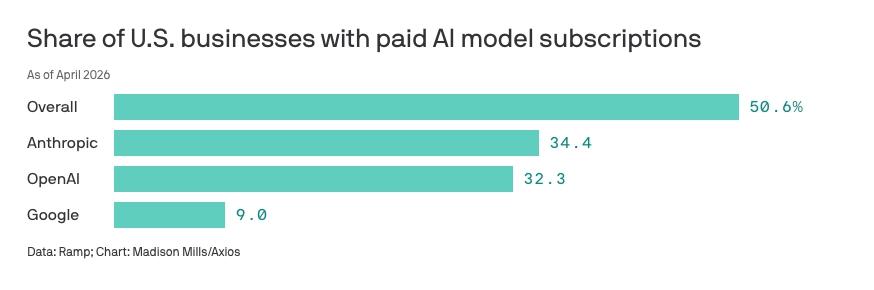
Anthropic overtakes OpenAI in workplace AI adoption - Move over, ChatGPT. Ramp’s index finds that Anthropic has overtaken AI in business adoption as of April 2026.
Humanity AI announced more than $18 million in new grants - A collaborative philanthropic initiative dedicated to ensuring artificial intelligence (AI) serves the public good has announced grants to organizations whose work includes protecting workers’ rights, strengthening journalism, and advancing education.
University of Kentucky to use AI to audit financial health and employee policy adherence - The university plans to use AI to identify risks within the university, such as misappropriation of money, fraud, policy violations and actions that don’t align with UK’s values.