The hidden fee era is ending — fast
CX Insights
The hidden fee era is ending — fast
Hidden costs at checkout. Subscriptions you can't cancel. Regulators on both sides of the Atlantic are done looking the other way.
In the UK, the Competition and Markets Authority fined the AA £4.2m and ordered repayments to more than 80,000 learner drivers after finding that a mandatory booking fee wasn't disclosed upfront — a practice known as drip pricing. The AA cooperated and admitted to breaking the law, which reduced its penalty by 40%. Still, £4.2m is a hard lesson. And the CMA isn't stopping there: active investigations are underway into StubHub, Viagogo, Gold's Gym, Wayfair, and others. With new powers that let it act directly — no courts required — the CMA's message is clear: hidden fees will cost you more than transparency ever would.
Across the Atlantic, New York City is taking aim at a related problem. Mayor Mamdani and the Department of Consumer and Worker Protection proposed a "Click to Cancel" rule that would require any subscription easy to sign up for to be just as easy to cancel. The rule targets the full playbook of subscription traps: free trials that quietly convert to paid plans, cancellation flows buried in endless steps, and unclear instructions designed to wear customers down. Businesses that violate it would face fines starting at $525 plus restitution. If adopted, NYC would become the first municipality in the US to enforce this level of consumer protection.Taken together, these moves signal a broader shift. Consumers have always hated feeling tricked — now regulators are catching up.
For CX leaders, the question isn't whether your pricing and cancellation flows are technically legal. It's whether they're actually easy. Friction that favors retention over clarity is a liability, not a strategy. And even if your business isn’t based in the UK or NYC, it’s important to pay attention to what’s happening there and adjust your brand policies so all customers have a consistent experience.
Consumer confidence hits a historic low — CX leaders, take note
The University of Michigan Consumer Sentiment Index just dropped to 47.6 — the lowest reading ever recorded, below even the inflation-rattled summer of 2022. And unlike that dip, this one isn't being driven by hard economic data. Unemployment, inflation, and markets are holding relatively steady. What's tanking confidence is vibes: geopolitical tension, political anxiety, and a growing fear of what's coming next.
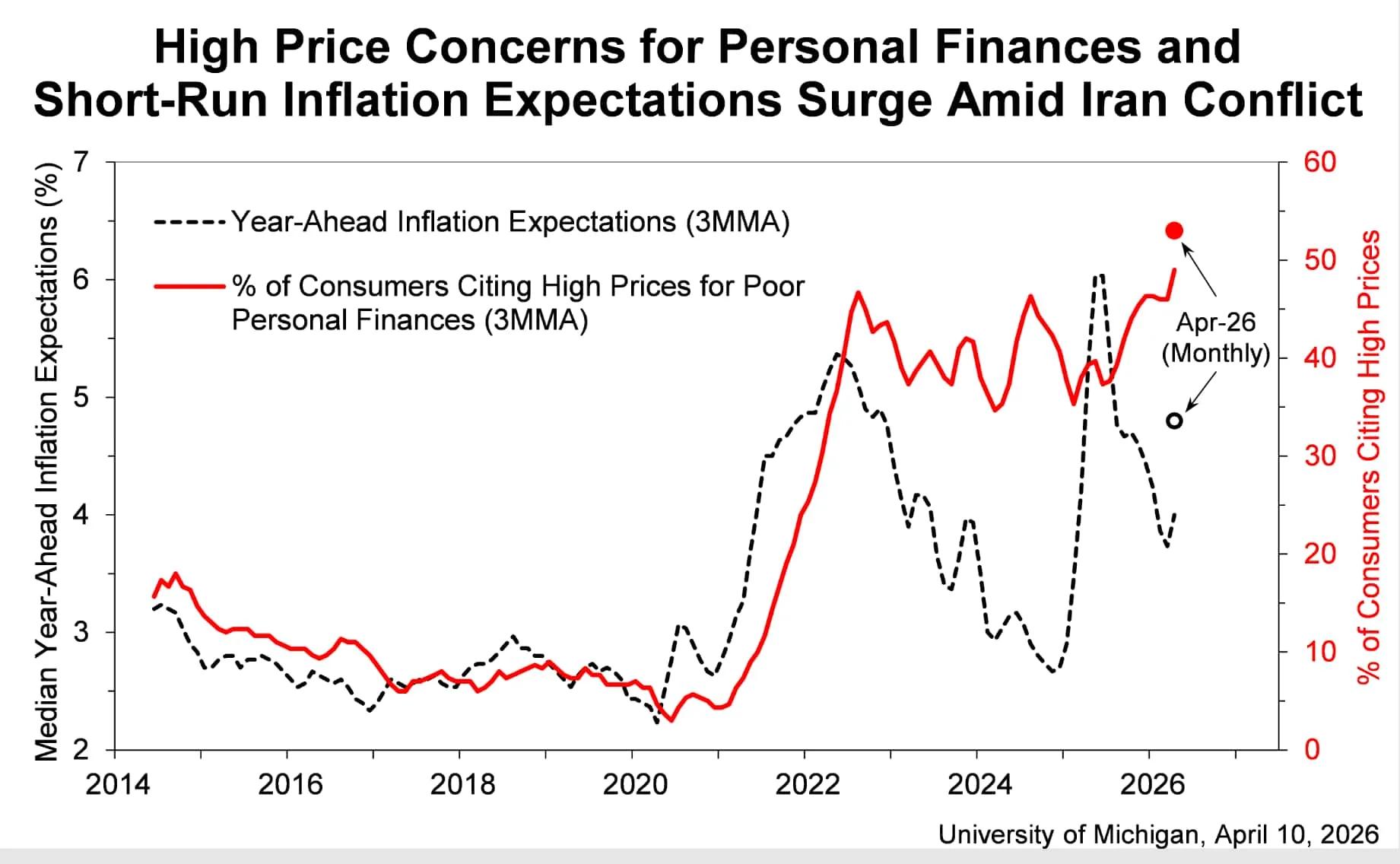
Everyone is feeling it. Age, income, and political demographics all posted sentiment declines, with many citing the Iran conflict as a primary driver. Even middle- and higher-income consumers are pulling back.
For CX leaders, this is a moment to read the room. Consumers who are bracing for harder times respond to brands that acknowledge the pressure and meet them with flexibility — loyalty programs, lower-cost alternatives, payment options that reduce friction. Trust becomes the differentiator when budgets tighten. The brands that get ahead of this with deliberate, empathetic messaging will have a meaningful edge over those still operating like it's business as usual.
The CX ROI case just got harder to ignore
CX skeptics love to call experience investments "soft." A new study says otherwise.
An analysis of the top and bottom 10 publicly traded companies over 18 years ranked by customer experience found that CX Leaders outperformed the S&P 500 by 415 points — while CX Laggards trailed it by 374. Leaders generated returns 7.8 times greater than Laggards, a performance gap that has more than doubled in the last five years alone.
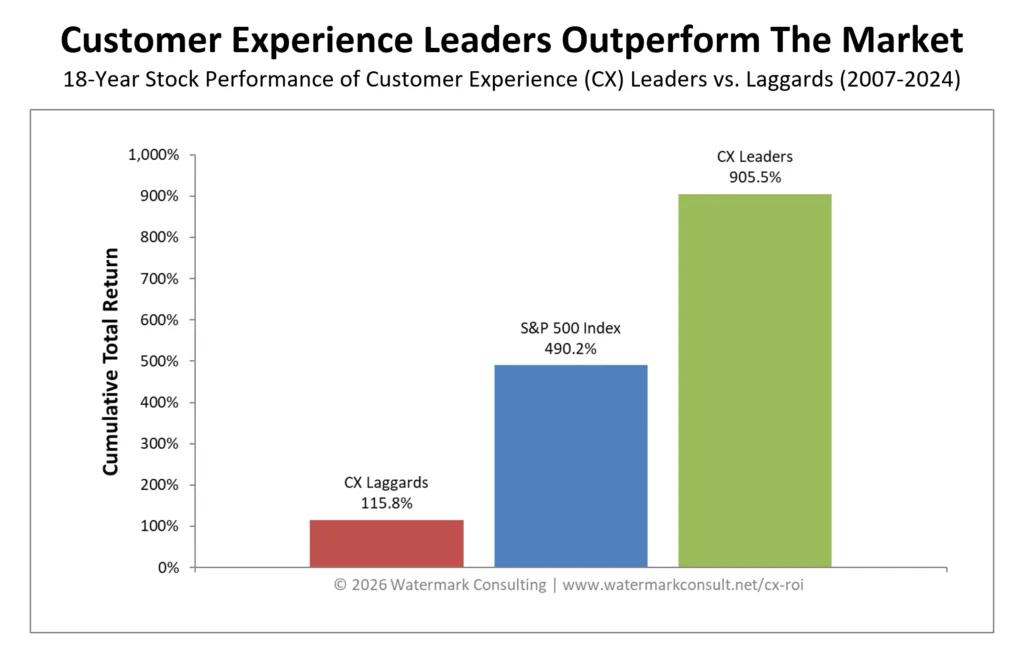
This shouldn’t really be all that surprising. Great CX grows revenue through better retention, lower price sensitivity, and word-of-mouth referrals. It also cuts costs — happier customers complain less, which means lower call and chat volumes and reduced spend on customer acquisition. It's a two-sided equation that most ROI arguments miss by only counting revenue upside.
For CX leaders still fighting for budget, this is the data to bring to the table. The question was never whether CX investments pay off. It's whether your organization can afford to keep treating it as optional.
Tune In

After two incredible in-person events in New York and LA, we wanted to bring the same energy, the same caliber of guests, and the same actionable conversations to you all year round — no travel required. CX Now will dig into CX, AI, data, and best practices, with every episode designed to leave you with something you can actually use.
For our first guest, we went straight to the source. Brad Birnbaum has spent decades building tools that change how CX leaders and frontline agents work — and as Kustomer's CEO, he has a front-row seat to where AI is taking this industry next.
Watch the episode or read the transcript here.
We’ll be dropping episodes every other Friday. Subscribe wherever you get your podcasts:
AI Headlines
California AI Order Raises CX Standards but Leaves Gaps in Governance and Oversight - the goal is to reduce risks such as bias, privacy violations, and misuse while ensuring accountability in deployment.
Philippine BPOs shift beyond cost as AI transforms CX - BPOs are focusing less on competing on price and instead shifting to focus on shaping customer journeys and brand perception.
Why the Chicago Fed president says AI won't send unemployment to 15% - Chicago Federal Reserve Bank president Austan Goolsbee predicts the productivity gains from AI will change jobs and create jobs in the long run.
Google to provide $10M for Manufacturing Institute AI training programs - the funding will develop AI skills training programs for shop floor workers and expand employer-led apprenticeship programs.
GSA looks to automate a million work hours, after losing nearly 40% of its workforce - the GSA is halfway to its goal and is piloting GSA Labs with 30 employees, and looking to scale.