Loading…
Harvard Business Review found that 81% of consumers try to solve their problems on their own before reaching out to a customer service agent. So how can you improve your self-service to accommodate your potential customers?
Today's customers don't want to wait for help — they want to find it themselves. Harvard Business Review found that 81% of consumers try to solve their problems on their own before reaching out to a customer service agent. That instinct isn't a problem to manage. It's an opportunity to get ahead of.
The question isn't whether your customers will attempt self-service. They already are. The question is whether your self-service experience is good enough to actually resolve their issue — or whether it's just a frustrating detour before they end up in your agent queue anyway.
Poor self-service doesn't just create more tickets. It creates more frustrated customers arriving with less patience.Investing in self-service that works means fewer contacts, faster resolutions, and customers who feel empowered rather than abandoned.
But building effective self-service is more nuanced than publishing a help center and calling it done. It requires understanding where customers get stuck, what questions they're actually asking, and how to surface the right answer at the right moment — whether that's through a knowledge base, an AI-powered chatbot, guided troubleshooting, or a seamless handoff to a live agent when self-service falls short.
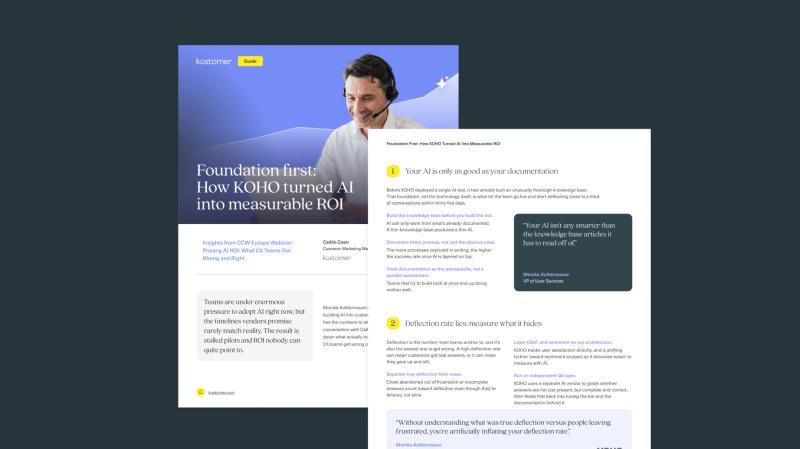
This guide covers:
Better self-service isn't about keeping customers away from your team. It's about meeting customers where they are — and giving them the fastest path to resolution, whatever that looks like.