
AI Headlines
AI doesn’t reduce work - it intensifies it
This Harvard Business Review article outlines the impact of AI on work. Researchers conducted an eight-month study of an about 200-person U.S. based tech company that leveraged AI tools but did not mandate usage. It found employees “worked at a faster pace, took on a broader scope of tasks, and extended work into more hours of the day, often without being asked to do so.” Tasks expanded as workers were capable of doing new things, took fewer breaks, and multitasked more. The consequence of this initial productivity boost was workload creep: employees felt stretched because they had the tools to do more, but also spent more time reviewing and correcting AI-generated work that was not always done to their quality standards.
These findings align with our AI Reality Check report from last year; over 26% of CX leaders reported that AI increases the workload of frontline employees and almost 20% said AI makes the agent job harder. AI is automating the routine, simpler work, leaving employees to handle bigger, more complex tasks.
The researchers suggest being intentional with shaping how your team uses AI at work - and we agree. Providing specific tools and clearly defining what tasks AI should handle will help the organization maintain the right balance of speed and quality of work. It’s important for CX leaders to reframe this shift as their team members gradually upskill into providing service rather than process.
New York proposes 3-year pause on new data centers
Concerned about energy use, NY state lawmakers have introduced a bill to “impose a moratorium of at least three years on permits tied to the construction and operation of new data centers.” This coincides with another initiative from the Governor called “Energize NY Development” to modernize how large energy users connect to the grid and pay for their use. New York is the sixth U.S. state considering pausing development of such data centers, joining Georgia, Vermont, Virginia, Maryland, and Oklahoma.
Diners not ready for AI in restaurants
Restaurant operators are making big investments in tech to help boost margins and the customer experience, with 60% of operators prioritizing customer experience - up from 42% in 2023. 17% of operators have said AI specifically is most useful for marketing purposes.
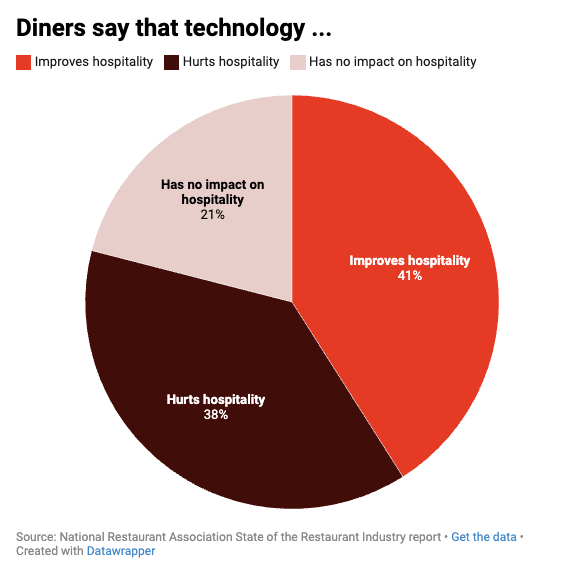
While diners are accustomed to ordering kiosks, especially at quick service restaurants, overall opinions are mixed about the role of tech in hospitality. 41% say tech improves hospitality, 38% say it harms hospitality, and 21% says it has no impact.
The minority of customers want to order via an AI chatbot or persona on a screen - showing for now, it’s still early for AI to be part of the customer-facing experience in dining. However, CX leaders in the food service industry can still explore AI tools to empower customer experiences through things like loyalty and retention offers.
Two xAI cofounders depart
Prominent AI scientist and cofounder of xAI Jimmy Ba has left the company the day fellow cofounder Tony Wu announced his resignation. This follows SpaceX’s announced merger with xAI at a $250 billion valuation.
How can you secure customer trust in the age of AI?
CX organizations are excited about AI. But are customers?
As AI becomes central to modern customer experience strategies, customer trust varies widely based on past experiences, demographics, and more.
Dig into the data about what consumers actually feel about AI-powered experiences and get recommendations for how to build trust with your customers.
CX Insights
Over half of consumers have switched to a competitor because they got bombarded with messages
A new study of over 1,000 consumers found that while 81% of consumers want brands to which they feel loyal to send messages with reminders and deals, 55% have switched to a competitor because they got too many messages, and a quarter have considered making a switch.
It all comes back to relevancy - consumers want fewer but more targeted messages. Just two weeks ago I reported on a study that found consumers are getting generic or incorrectly personalized messages, which erode brand loyalty.
CX leaders: it’s really, really time to connect your customer data with your marketing team.
Target cuts jobs to invest in customer experience
The new CEO of Target is already shaking things up: Target will be cutting about 500 jobs at distribution centers and regional offices in favor of increasing staffing and training for front-line store employees. The chain is acting on feedback about sloppy store shelves, out-of-stock items, and long checkout lines. The goal: bring shoppers back by restoring its reputation for style compared to competitors like Walmart, and provide a more consistent customer experience.
It’s not clear exactly how much investment will go to new staffing, but Target has over 2,000 stores - will reallocating the pay of 500 workers actually be enough to make a difference at the store level?
Back in November, I wrote about Target’s 10-4 initiative to greet and serve customers. Clearly, that alone was not enough to resolve the issues. I’m curious what kind of improved guest experience training Target will provide and if shoppers will notice. Perhaps the new CEO realized shoppers like to self-serve, but need tidy and well-stocked stores to actually make a purchase.
New Disney CEO leadership style: experience intelligence
A leadership researcher profiles the incoming CEO of Disney, Josh D’Amaro, and shares that D’Amaro goes beyond charisma and personality and embodies “experience intelligence.” D’Amaro understands that tools to change guest and employee behavior can drive short-term results, but it takes deeper feelings to drive long-term behavior that drives outcomes. It all comes back to driving customer experiences.
Disney guests are some of the most opinionated about its CEO in relation to customers of other brands. I’m curious to see what D’Amaro changes and how Disney fans will respond.
Uber for Business and Mazda team up
More options for Mazda customers: Mazda is collaborating with Uber for Business to expand options for customers as they wait for vehicles to be serviced. This can make car service just a little less of a pain to deal with as dealers can offer and coordinate rides for clients, going beyond shuttles or loaner vehicle options. They can even offer Uber Black or Uber Comfort, upleveling the customer experience.
I don’t want to jinx it and bring car problems to my own Mazda upon myself by saying “I’m curious about this experience” - but if I ever have to take my SUV to the dealer, I’ll certainly be waiting to see if they offer this service to me.